





Where Dental Practices Lose Revenue Without Realizing It
Dental Practices can have a schedule with a flow of referrals and strong production numbers and yet still leave Revenue on the table. Revenue does not begin when a claim is submitted. Revenue begins earlier when a patient enters the Dental Practice through a referral, an appointment request or another point of contact. Continues through scheduling, insurance verification, treatment, claims processing, payment posting and accounts receivable. A breakdown at any of these stages can prevent an opportunity from becoming collected Revenue.
Revenue Leakage should not be viewed as a billing problem. Revenue Leakage is often a visibility and process problem. A recent Dental Economics article, "Capturing the Leak: The Value in Nonscheduled Referrals " highlights one of the examples: referrals that reach a Dental Practice but never become consultations. The article recommends capturing those referrals, tracking their status, monitoring their age, assigning responsibility for follow‑up and documenting why they do not progress. Dental Economics: Capturing the Leak The principle can be applied across the dental revenue cycle: if a Dental Practice cannot see where an opportunity stops moving it becomes difficult to understand where Revenue is being lost.
Revenue Leakage starts before the claim
Revenue cycle management is often associated with claims, denials, payment posting and AR. Those activities represent part of the financial journey. Consider a referred patient who contacts a Dental Practice but never schedules. There may be no claim, no balance and nothing for the billing team to recover yet a treatment opportunity has already disappeared. If the referral was never captured or tracked, leadership may continue seeing a volume without realizing how many opportunities are falling out before treatment even begins.

The same problem can occur further downstream. A patient may. Have insurance information. Treatment may be. Lack the documentation needed to support a claim. A claim may be submitted with an error. Rejected. A denied claim may remain untouched until it becomes AR. Each event looks like an issue but financially they are connected. The useful question is not simply how much a Dental Practice produced or collected but how effectively opportunities moved from referral to appointment, appointment to treatment treatment to claim and claim to payment.
The Referral Pipeline deserves attention
Referrals are usually viewed as a growth metric while revenue cycle management is viewed as a function. In reality the two are closely connected. A referral represents treatment and future reimbursement which means what happens after the referral arrives can influence production before the billing process even begins.
The Dental Economics article points out that Dental Practices may track referrals through scheduled consultations leaving nonscheduled referrals outside their pipeline.
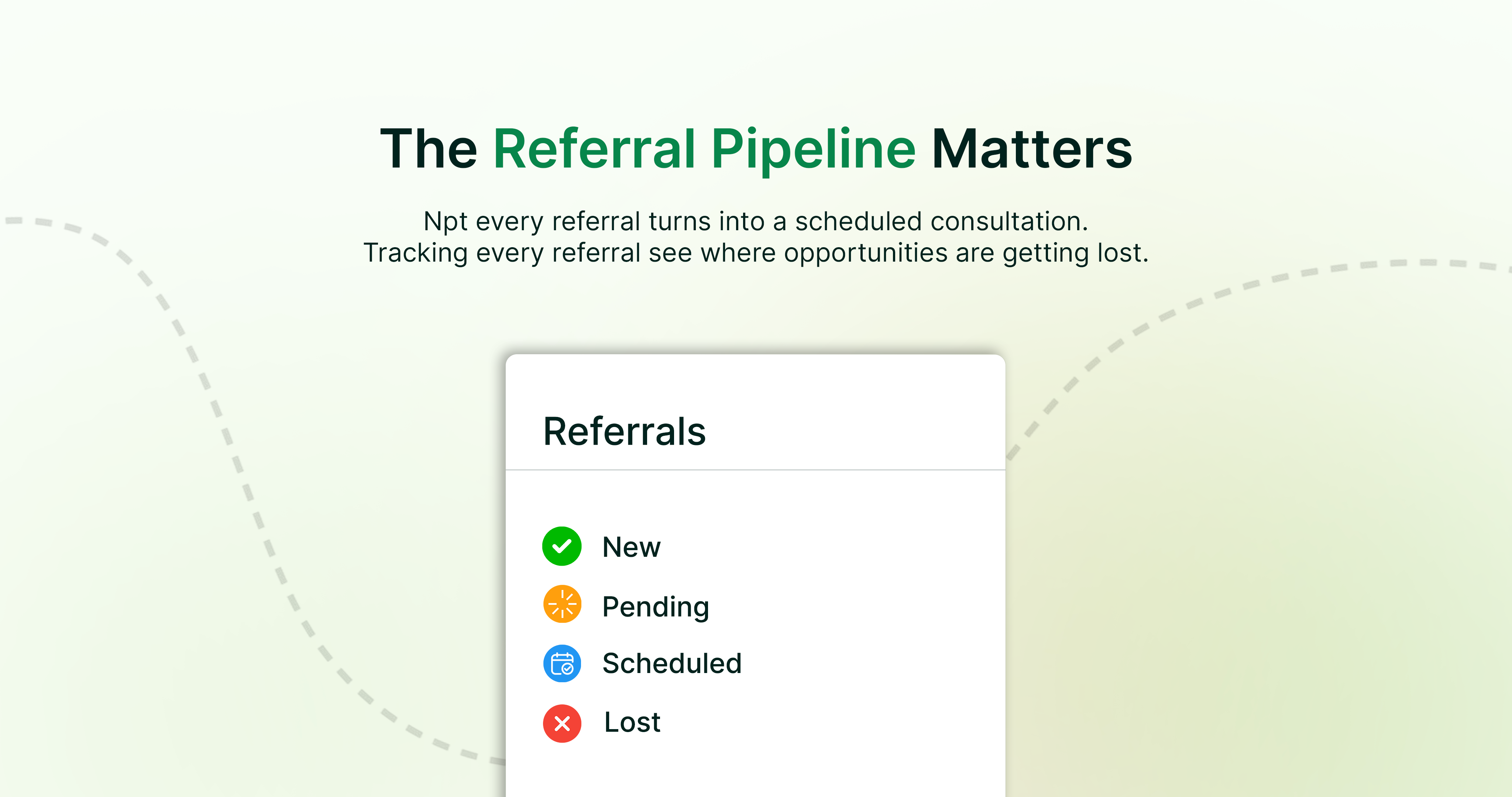
Tracking every referral creates a level of visibility. Dental Practices can identify which referrals are new which are pending how long they have been. Why have they not moved forward? That information can reveal whether the issue is follow‑up, scheduling capacity, communication, patient availability or another operational barrier.
This changes the growth conversation. By focusing on generating more referrals a Dental Practice can first determine whether it is effectively converting the opportunities it already receives. More volume does not solve a process that consistently loses opportunities after they arrive.
Time turns gaps into problems
One of the ways to identify Revenue Leakage is to look at how long unresolved work remains unresolved. A referral waiting two days for follow‑up is different from one that has been sitting for 60 days. A submitted claim is different from a claim that has aged significantly. The same principle applies to accounts
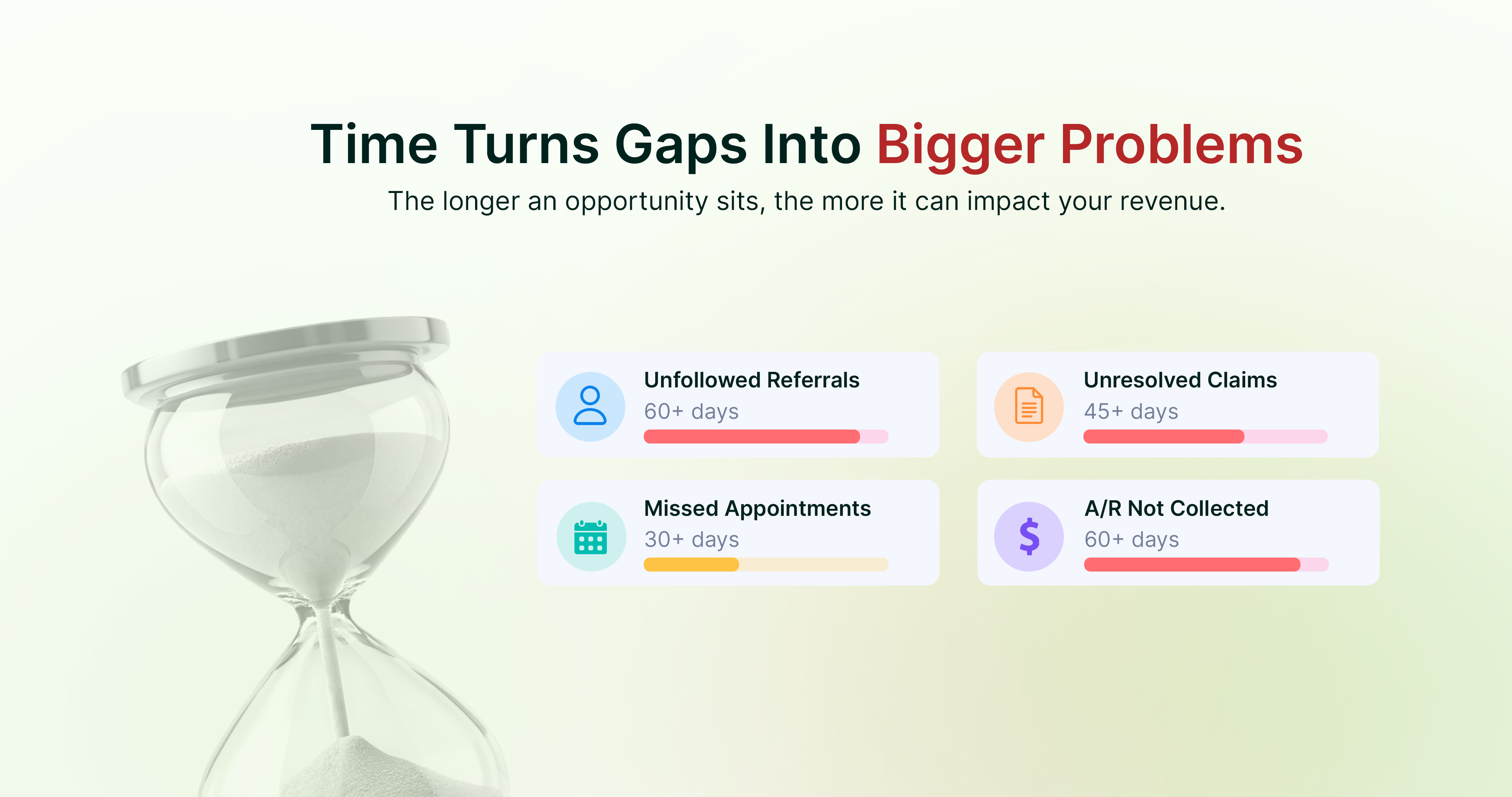
Aging gives Dental Practices another layer of information beyond volume. Aging helps identify which items are becoming more urgent and where work may be getting stuck. A Dental Practice could have a number of pending referrals. Still appear healthy when looking only at the total. Once those referrals are organized by age however leadership may discover that a significant portion has been waiting long for action. The same analysis can be applied to claims and AR to distinguish processing from activity that requires intervention.
Ownership keeps Revenue moving
Tracking a problem does not fix the problem. Someone must take responsibility for the step. The Dental Economics article stresses how important it is to give ownership to referral follow‑up of letting pending referrals turn into a task that can be ignored. This idea stretches across the revenue cycle.
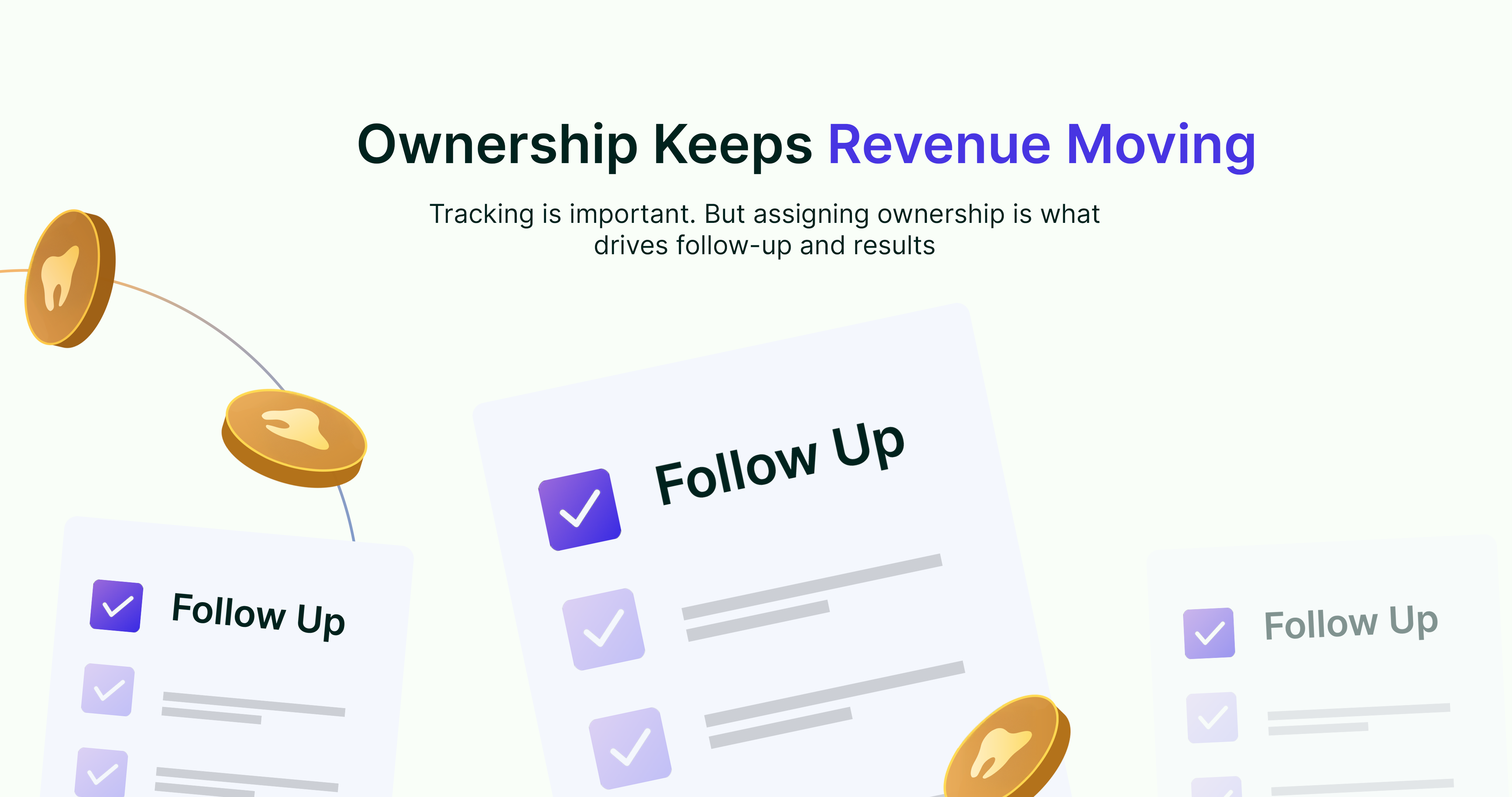
Unresolved claims must have a follow‑up plan. Denials must receive action quickly. Aging balances must get attention. Recurring problems need someone who can spot the pattern and decide if the underlying process should change. When ownership is not clear an item can stay on a report for weeks yet never move forward.
For practices and dental groups that are growing this becomes more critical. More patients mean more referrals, more claims, more payments and more accounts receivable. Without ownership and steady workflows increased activity can give chances for something to slip through the cracks.
Claims Can Hide Revenue in Plain Sight
Finishing treatment does not mean you will get paid. After a claim is sent it must travel through payer processing and many things can happen. A claim can be rejected, denied, delayed, underpaid or held while more information is asked. If those results are not watched closely the claims you have sent can give a feeling of progress.
That is why the number of claims is not a measure of how the revenue cycle works. A practice might send thousands of claims yet still have a lot of money issues. A better view looks at what happened after a claim was sent, how long it took to get paid, whether the expected payment arrived and what was done when it did not.
Linking claims with payment and accounts data makes the analysis more useful. Then treating submission, payment and unpaid balances as separate reports practices can track the money path of each claim and spot where reimbursement slows down.
Denials Should Reveal More Than the Next Task
A denied claim normally creates a job: find out why fix the problem and resubmit or appeal if needed.. When the same denial reasons show up again. Again the problem can be bigger than the single claims.
Repeated denials can signal problems with eligibility, paperwork, coding, missing details, payer rules or filing late. Checking each denial by itself helps fix accounts but examining denial patterns can show weaknesses earlier in the process. That is where dental revenue cycle management goes beyond following claims. The data from denials can help practices spot where extra work is being made and where preventive changes could cut problems.
A practice should ask two questions: How many claims were denied and what do those denials say about the process? The second question is usually more useful because it shifts focus from fixing yesterday’s problem to stopping tomorrow’s.
AR Is the Result Not Always the Cause
Accounts receivable is where many money problems show up. It is rarely where they start. An aging balance may come from a claim by a payer asking for information, an unresolved denial, an underpayment or follow‑up that did not happen fast enough.
That is why a total of AR without context tells part of the story. Practices must understand how old the unpaid balances are, which payers are involved, what the claim status is, why the balance stays open and what has already been done. A practice with $500,000 in AR could be in a financial position from another practice with the same balance depending on how much is new versus old and what drives the unpaid amount.
Effective dental revenue cycle management services should look beyond the size of AR. The goal is to understand what keeps money unpaid and whether those issues come from the collections process or from steps in the revenue cycle.
More Production Does Not Automatically Fix Leakage
When money performance needs better raising production is a place to start. More patients, procedures, more referrals and more services can all help growth.. More volume does not automatically solve a process that is already losing chances.
If referrals are not followed up, adding referrals raises the number of chances that can be missed. If claims are denied again and again more treatment makes claims that may run into problems. If accounts receivable follow‑up is already slow, more claim volume can grow the backlog.
This does not mean that practices should stop pursuing growth. It means that growth and revenue‑cycle efficiency must grow together. Before adding work practices should understand how well they capture the work they already generate. The question is not how much business enters the practice but how much of that business successfully moves through the process.
Measure the Points Where Revenue Can Stop Moving
Practices don't need a hundred metrics to spot where money is slipping through the cracks. You just need to see where opportunities enter your system—. Where they stall out.
It starts with tracking the end. Looking at volume, scheduled consultations, pending referrals, aging lists and reasons for non-conversion shows you whether potential patients are actually making it through the door. Down the road tracking insurance verifications, claim submissions, rejections, denials, payment posting and AR aging gives you a true picture of your financial health.
The real magic happens when you connect these dots by looking at them in isolation. If referrals are. Scheduled consults are flatlining. You know there’s a bottleneck between the intake and the schedule. If production looks great but collections are lagging your team can immediately zoom in on claim bottlenecks, payer delays or AR.. If a single insurance company is driving up your past-due balances you can address that specific payer rather than letting the problem hide inside a massive general AR number.
This approach turns reporting into an actual action plan. By measuring outcomes your practice can trace every result directly back to the process that created it—and fix what’s broken.
The Revenue May Already Be in the Practice
The important lesson from referrals is not simply that practices should track more referrals. It is that opportunities can become invisible when there is no process to capture, measure and follow them.
The same rule is true after treatment. A referral that never gets set up is a chance lost. A patient with insurance details can cause problems. A done procedure that leads to a claim that is turned down creates work. A claim that is denied and not fixed can turn into old accounts receivable. A balance that doesn’t get followed up on can become harder to get
These are situations. They are linked.
For offices dental RCM services can add order and responsibility to the financial parts of the process from checking insurance and managing claims to dealing with denied claims posting payments and handling accounts receivable. A strong dental RCM company can also help offices see trends across these steps treating each issue as part of a picture instead of a separate event.
The goal is not to make another report or chase every dollar. It is to ensure real chances do not quietly vanish because a process stopped and no one noticed.
Find the Leak Before It Becomes AR
Revenue loss is often discovered after the financial effect is already visible. By the time an issue shows up as accounts the original problem might have happened weeks before. That is why offices need to look and follow the path from referral and booking to treatment, claims, payment and accounts receivable. Monitoring referrals that never get scheduled claims that keep getting denied and old balances can show where money is slowing down before the problem gets too hard to fix.
The chance to make money might not need patients. It could already be, in the office waiting for the step. The first sign of revenue loss is not always a claim. Sometimes it is an opportunity that stopped moving before a claim was ever made.
Find where your money is getting stuck
Work with CareRevenue to improve your RCM and capture more of the money your office has already earned. Talk to our RCM team →
See Related Blogs
