





Dental Insurance Verification in 2027: What to Prepare
New year, new insurance benefits, and a few surprises dental practices should be prepared for.
January is always a busy time for dental practices. Patients return for appointments, new treatment plans begin, and many insurance benefits reset for the year.
But for the front-office team, the new year can also bring insurance headaches.
A patient who had active coverage in December may have a different plan in January. Benefits may have changed, deductibles may have reset, and some insurance carriers may still be updating their systems. These changes can make insurance verification more time-consuming, especially during the first quarter of 2027.
The challenge isn’t just confirming whether a patient has insurance. It’s making sure the practice has the right benefit information before treatment begins.
Same Patient, Same Insurance Company, Different Benefits
Imagine a patient who has been visiting your practice for years. They have the same employer and carry the same insurance card.
Everything looks familiar.
But their employer may have changed the insurance plan for 2027, even if the carrier remains the same. The deductible, annual maximum, coverage percentages, or frequency limitations could be different. If the practice relies on last year’s verification, the patient estimate may be incorrect.
The insurance company may be the same, but the benefits may not be.
That’s why the first verification of the new plan year should be treated as a fresh review.
Why does dental insurance verification take longer in early 2027?
Early in the year, carriers process new enrollments, employer plan changes and benefit renewals. During this period dental practices run into:
- New insurance plans that haven’t appeared in carrier portals yet.
- Patients who show as inactive while enrollment information updates.
- Missing or incomplete benefit details.
- Longer wait times when contacting insurance representatives.
- Delays from carrier system updates or temporary closures.
Not every carrier has these issues, but when one does, even a routine verification takes longer than expected. The delays can continue past January, so plan for them from January to March 2027.
The workload is already growing. CAQH’s 2024 Index recorded the largest increase in dental administrative spending in eligibility and benefit verification, up 15% to $2.1 billion, ADA News reports.
Does active coverage mean every procedure is covered?
No. Eligibility is only part of the picture, yet confirming active insurance leads many teams to treat the patient as ready for treatment. A patient with active coverage still faces restrictions such as:
- Waiting periods for major procedures.
- Frequency limitations for crowns, X-rays or periodontal treatment.
- Deductibles and different coverage percentages.
- Missing-tooth clauses and alternate benefit provisions.
Take a patient with active insurance who isn’t eligible for another crown on the same tooth because of a frequency limitation. If the practice misses it before treatment, the result is a denied claim and an unexpected patient balance.
Complete eligibility and benefits verification shows what the plan covers for the scheduled treatment, not just whether the policy is active.
What happens to appointments scheduled in December?
A patient books a crown appointment in December for treatment in January. The practice verifies insurance at booking and gives an estimate based on 2026 benefits. By the treatment date, the 2027 benefits apply: the deductible resets, the annual maximum renews or the coverage details change.
The December verification wasn’t wrong. It may simply no longer apply. Recheck benefits for every appointment that crosses into the new year, and update the patient estimate when anything changes.
How can dental practices prepare for 2027 insurance verification?
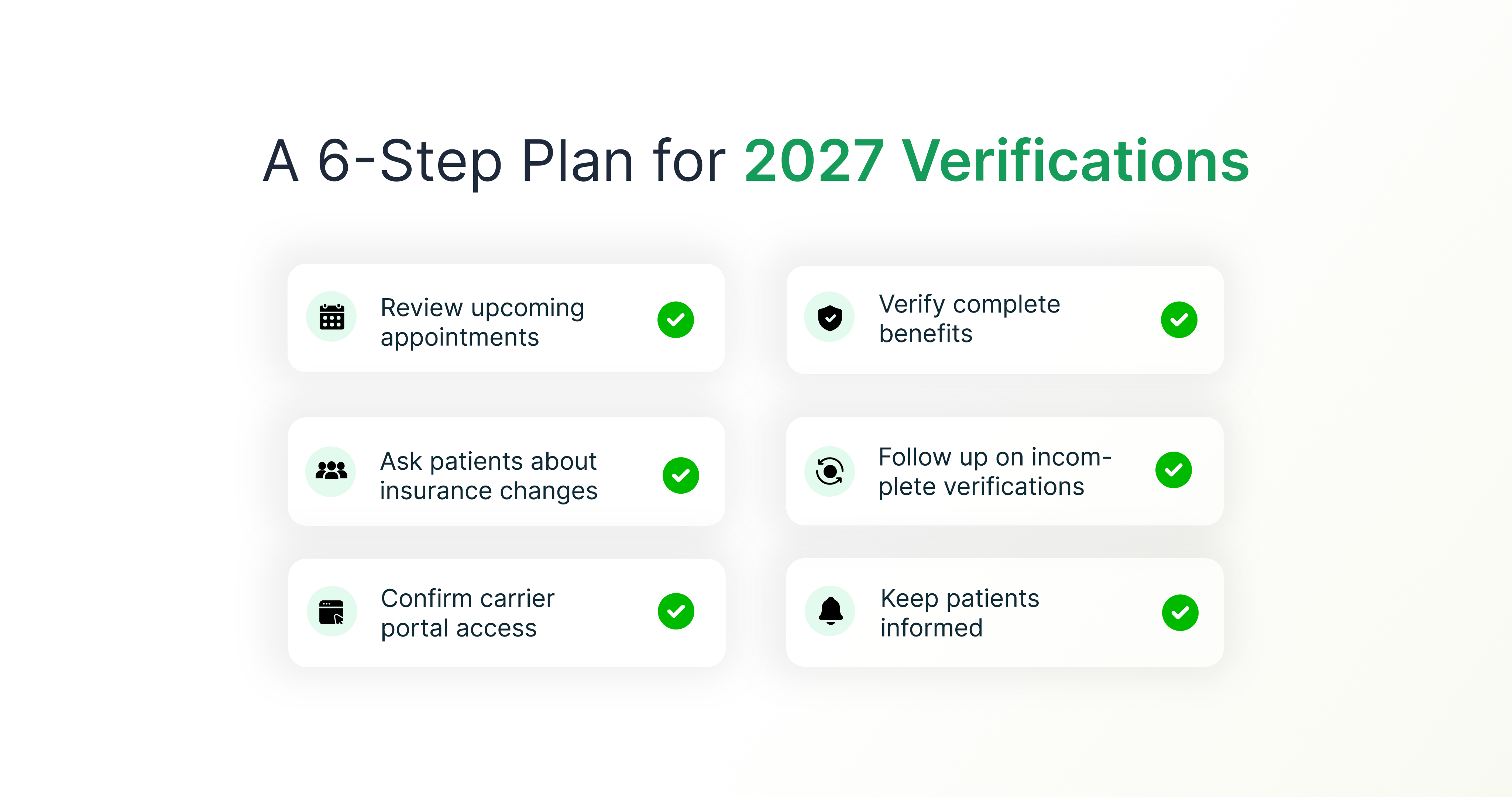
Six steps keep first-quarter verification on track:
Review upcoming appointments early. Identify patients who need updated insurance information, especially those scheduled for major procedures or treatment planned last year.
Ask patients about insurance changes. Request new insurance cards or updated policy information before appointments.
Confirm carrier portal access. Insurance portals are the quickest way to verify benefits, and missing access creates avoidable delays, particularly when carrier phone lines are busy.
Verify complete benefits, not just eligibility. Check deductibles, annual maximums, coverage percentages, waiting periods and frequency limitations relevant to the scheduled treatment.
Follow up on incomplete verifications. When a carrier hasn’t updated its information or a benefit stays unconfirmed, keep the case open for follow-up instead of marking the verification complete.
Keep patients informed. If benefits can’t be fully confirmed before treatment, tell the patient the estimate may change once the insurance information is available.
Why does carrier portal access matter for dental insurance verification?
Dental practices work with multiple insurance carriers, each with its own verification process. A verification team with carrier portal access retrieves eligibility and benefit information without waiting on the phone. Without access, even simple cases take longer, especially in the first quarter, when carrier representatives are harder to reach.
Practices that use dental insurance verification services, or any external verification team, prevent avoidable delays by providing access to all applicable carrier portals. Some benefits still need confirmation directly from the carrier, and portal access keeps the process moving.
How does complete verification prevent billing surprises?
Patients expect their dental office to explain their insurance coverage and estimated out-of-pocket costs. Benefits that aren’t verified correctly lead to claim denials, billing corrections, delayed payments and uncomfortable patient conversations.
Not every insurance issue is preventable, but reviewing benefits carefully and resolving missing information before treatment removes many avoidable problems. Denial rate is a core metric of dental revenue cycle management, and DentistryIQ puts the industry benchmark at 4% or below. A little extra time on verification saves hours of follow-up later.
How should dental practices start 2027?
The first quarter of 2027 brings extra insurance verification challenges, and prepared practices handle them well. Updated patient information, complete carrier portal access, early verification and timely follow-up make a real difference. Some carrier-related delays are unavoidable, so keeping patients informed and verifying benefits accurately stays the priority.
A smooth patient visit starts well before the patient sits in the dental chair.
Commonly Asked Questions
Q. What is dental insurance verification?
Dental insurance verification confirms a patient’s active coverage and benefit details before treatment. It covers the deductible, annual maximum, coverage percentages, waiting periods and frequency limitations, so the practice gives the patient an accurate estimate.
Q. Do dental insurance benefits reset every January?
Calendar-year plans reset the deductible and annual maximum on January 1. Other plans run on a rolling benefit year, so check each patient’s plan year during verification.
Q. What is the difference between eligibility verification and benefits verification?
Eligibility verification confirms the policy is active. Benefits verification confirms what the plan covers for the scheduled treatment, including deductibles, annual maximums, coverage percentages, waiting periods and frequency limitations.
Q. Should practices reverify appointments booked in December?
Yes. A December verification reflects 2026 benefits, and the 2027 plan can differ. Recheck benefits for every appointment that crosses into the new year, and update the patient estimate when anything changes.
Q. How does carrier portal access speed up dental insurance verification?
Portal access lets a verification team retrieve eligibility and benefit information without waiting on the phone. The gain is largest in the first quarter, when carrier representatives are harder to reach.
See Related Blogs
